About
The On-Demand Learning program “Optimizing Outcomes in Complex Wounds: From Biology to Advanced Therapies and Multidisciplinary Care” offers healthcare professionals a comprehensive, evidence-based update on the management of complex and difficult-to-heal wounds. Spanning the full continuum of care — from the underlying biology of impaired healing through advanced therapeutic modalities, surgical revascularization, and multidisciplinary patient optimization — the program equips clinicians to improve healing outcomes and preserve limbs in their most challenging patients.
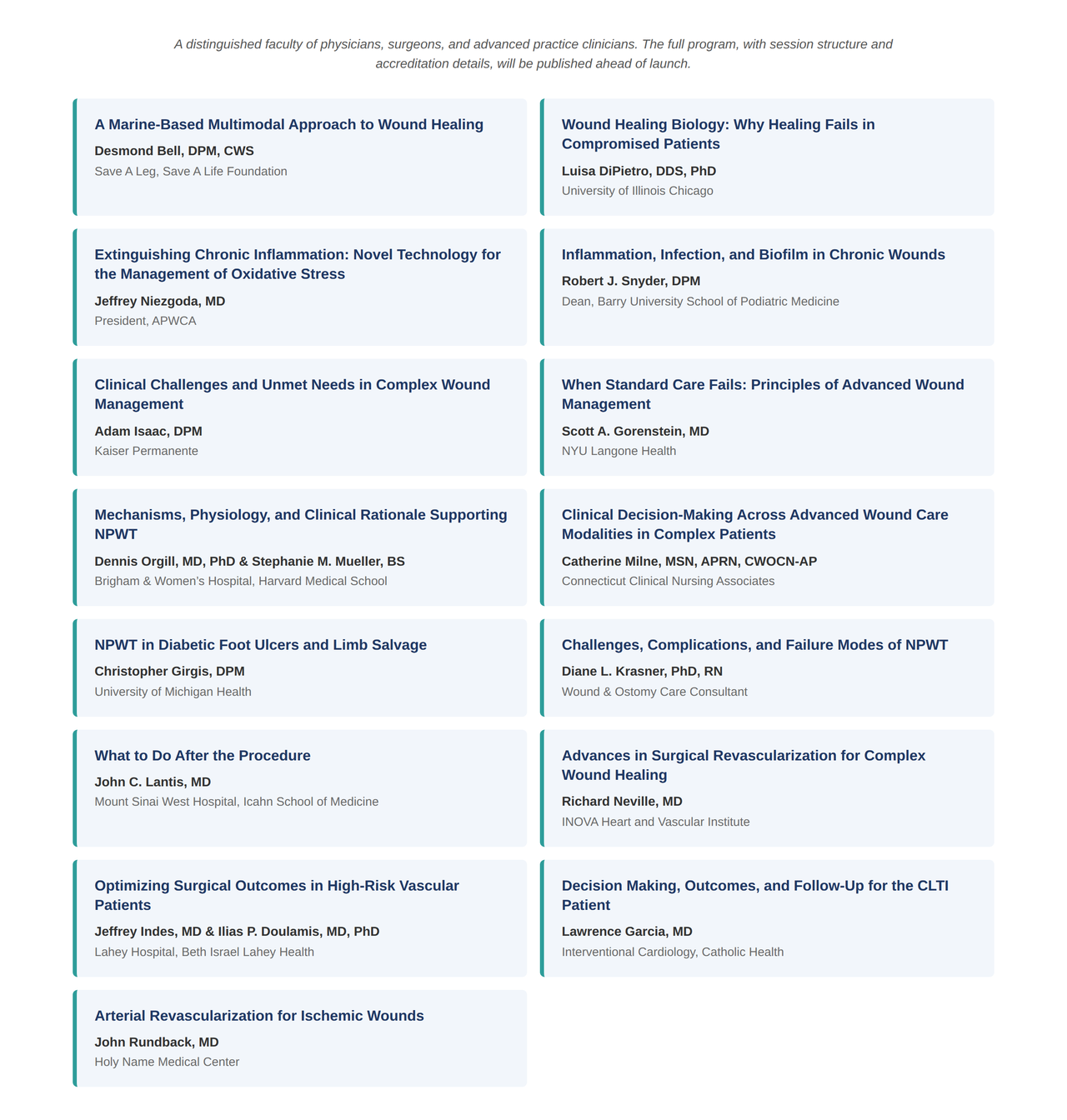
Structured across seven sessions and presented by a distinguished faculty of physicians, surgeons, and advanced practice clinicians, the program translates current science into actionable strategies that can be applied directly in clinical practice.
Educational Need
Complex wounds — including diabetic, ischemic, infected, and post-surgical wounds — represent a growing clinical and economic burden. Patients with these wounds face prolonged healing times, elevated risk of complications, and significant threats to limb preservation and quality of life. Effective management increasingly requires an integrated understanding that spans wound biology, advanced therapies, vascular intervention, and the management of comorbidities.
Despite rapid advances in wound science and therapeutic options, gaps persist between emerging evidence and everyday clinical practice. There is a pressing need to equip clinicians across disciplines with up-to-date knowledge and practical decision-making frameworks to optimize outcomes in high-risk patients.
Purpose
➢ Advance clinicians’ understanding of the biological, vascular, and systemic factors that drive impaired wound healing in high-risk patients.
➢ Present evidence-based and emerging strategies — including advanced therapies and multidisciplinary care — to optimize healing outcomes and support limb preservation.
Learning Objectives
After completing this activity, the participant should be better able to:
➢ Describe the biological mechanisms and clinical factors underlying impaired wound healing in high-risk patients.
➢ Compare standard and advanced wound care strategies, and identify appropriate indications for therapeutic escalation.
➢ Evaluate the role of surgical revascularization and perioperative optimization in supporting wound healing and limb preservation.
What you will learn
➢ The biology of impaired healing and why wounds fail in high-risk patients
➢ Clinical assessment, inflammation, infection, and biofilm in chronic wounds
➢ Advanced wound care modalities and therapeutic decision-making, including NPWT
➢ Surgical revascularization and limb preservation in high-risk vascular patients
➢ Patient optimization through nutrition, comorbidity management, and supportive care
➢ Real-world clinical cases and outcomes measurement
This program is supported by an independent educational grant from Solventum.
Faculty & Presentations — A Preview